
In beta development
A piano companion. Point your phone at a page in a real book, curved and shadowed on the stand, and it tells you what is on it in plain English. Your books, made clearer.
Why it exists
I am an adult beginner at the piano, with real books on the stand. The problem was not motivation, it was that I could not decode the page in front of me.
I fundamentally don’t know the basics of when I read the sheet, how do I remember what notes, especially if it’s shelves below. I want to be able to look at my phone at the side of the paper and then it help me.
How it works
Step one
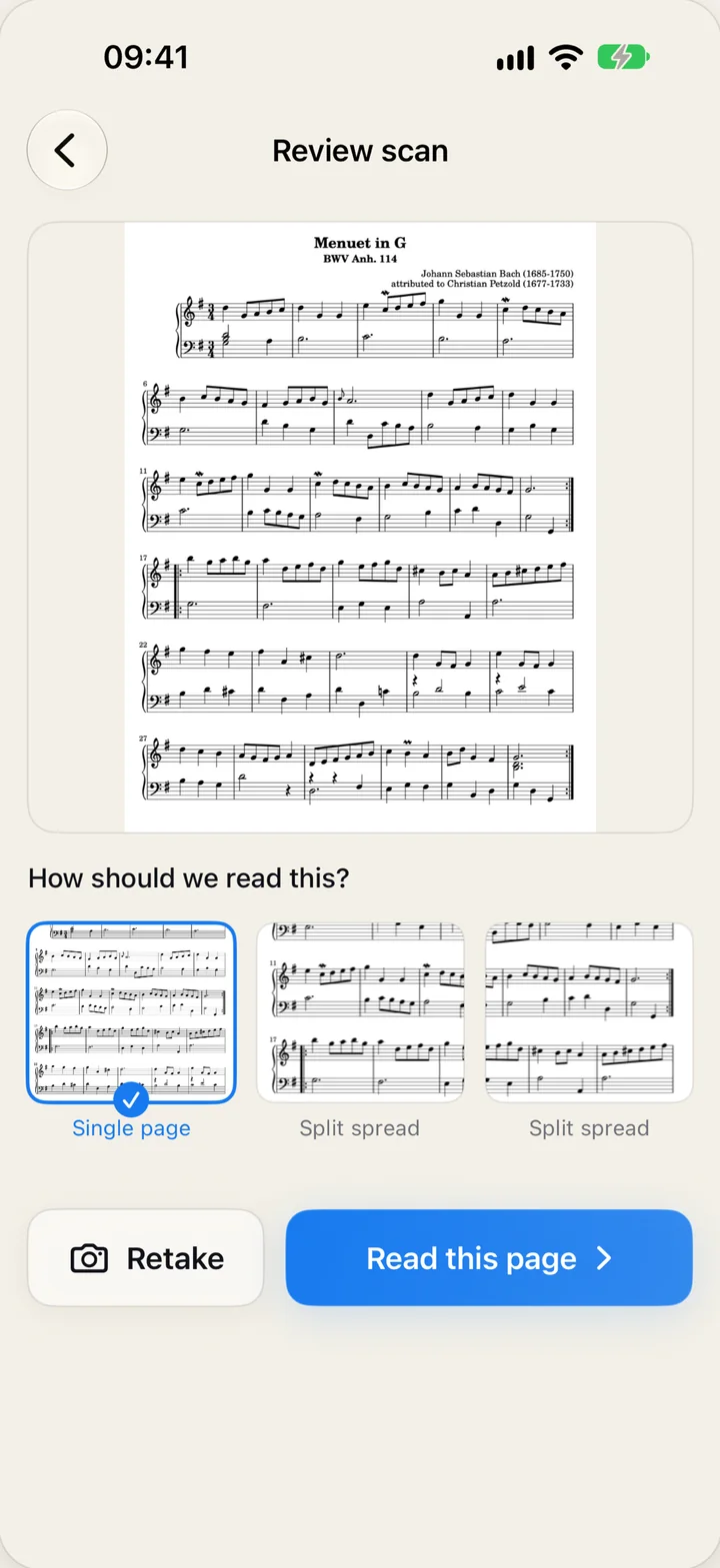
Photograph the page
Manual shutter, always. It takes a burst, keeps the sharpest frame, and flattens the curve of an open book.
Step two
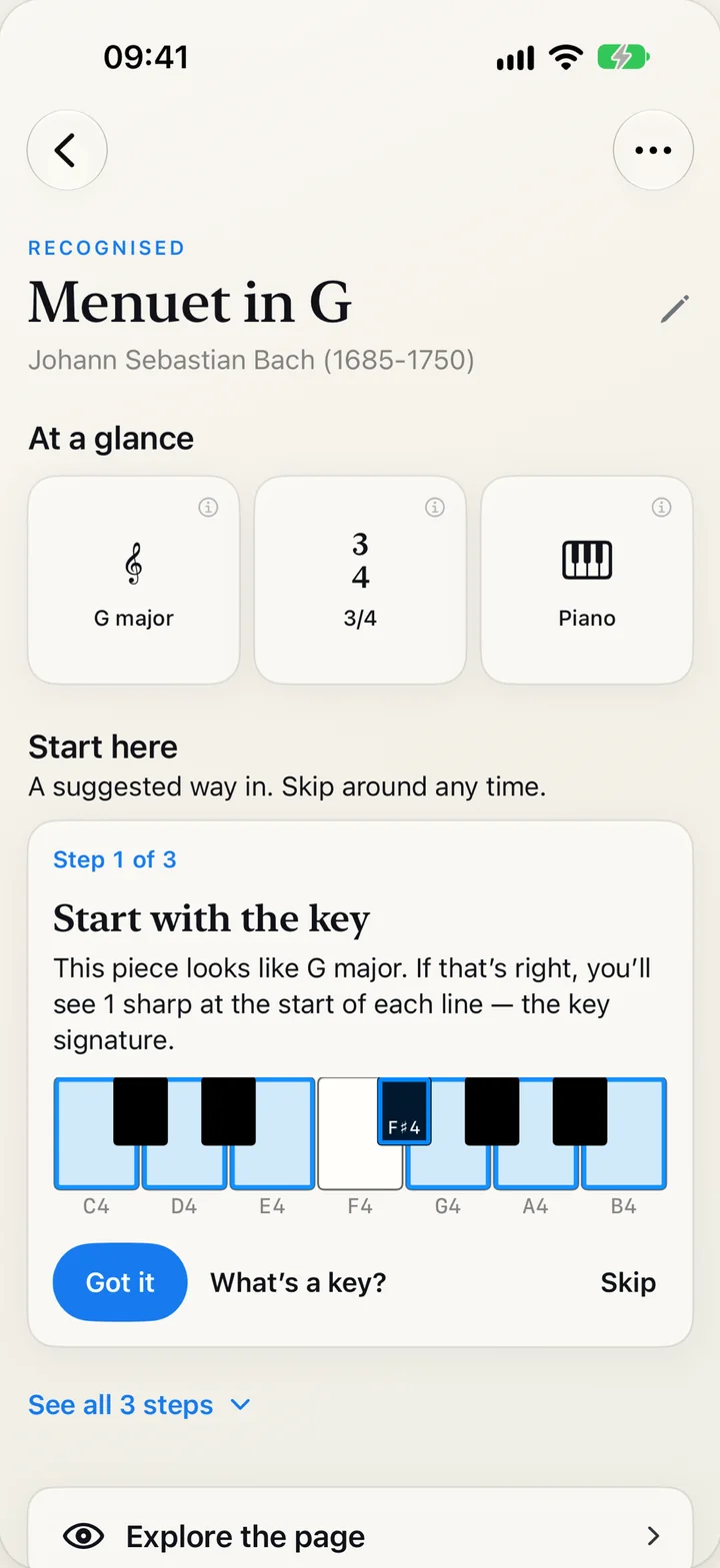
Read what is there
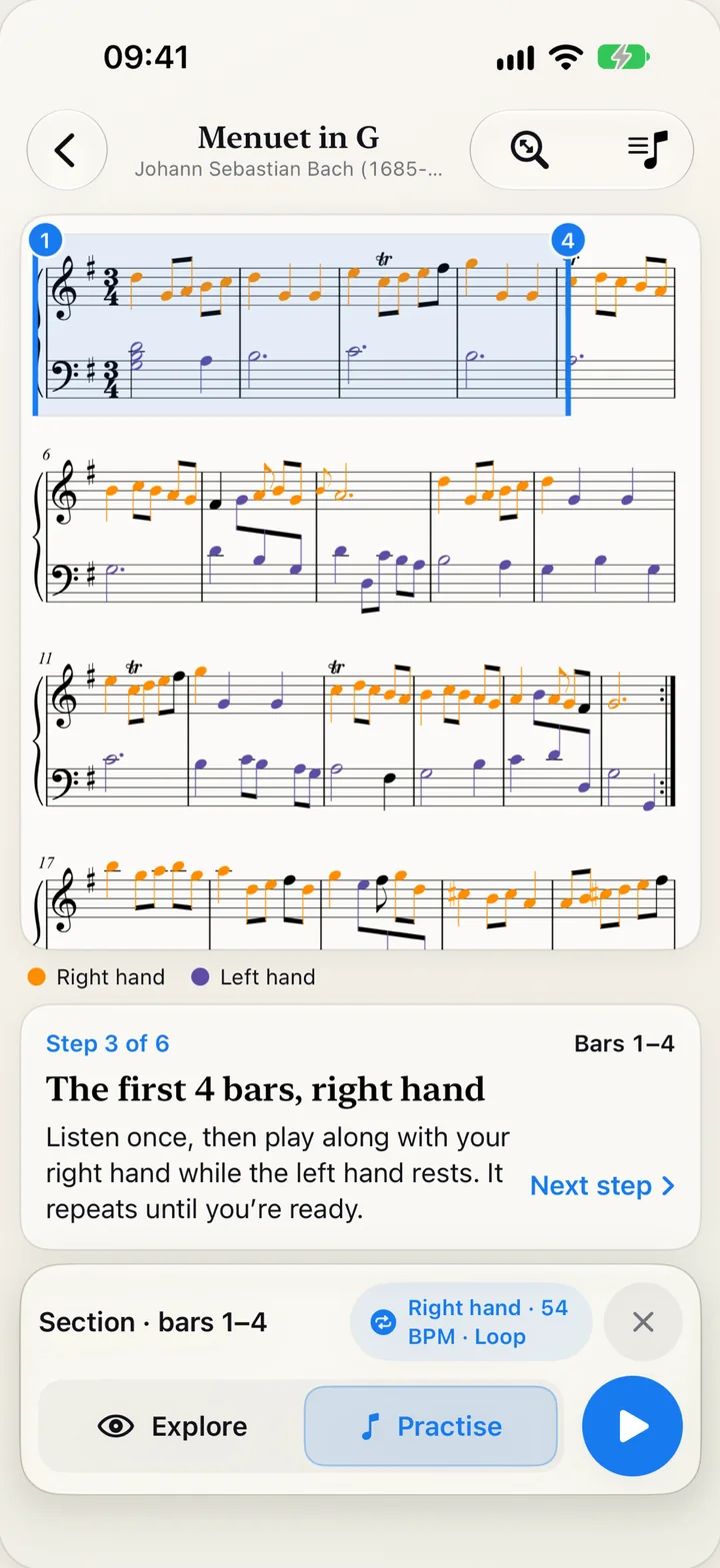
The key, the chords, the note range, and which hand plays what, with note names over the score. All of it worked out on the phone.
Step three
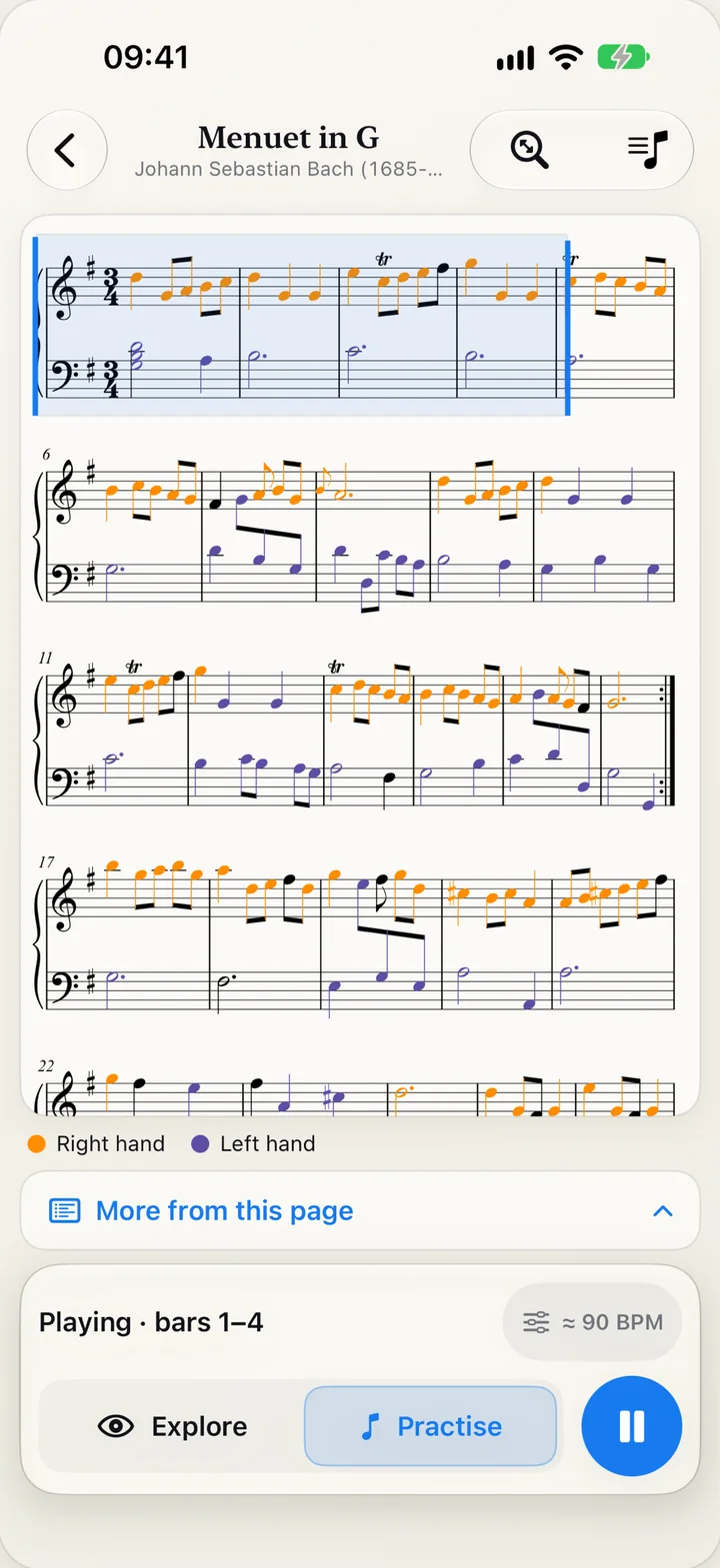
Explore or practise
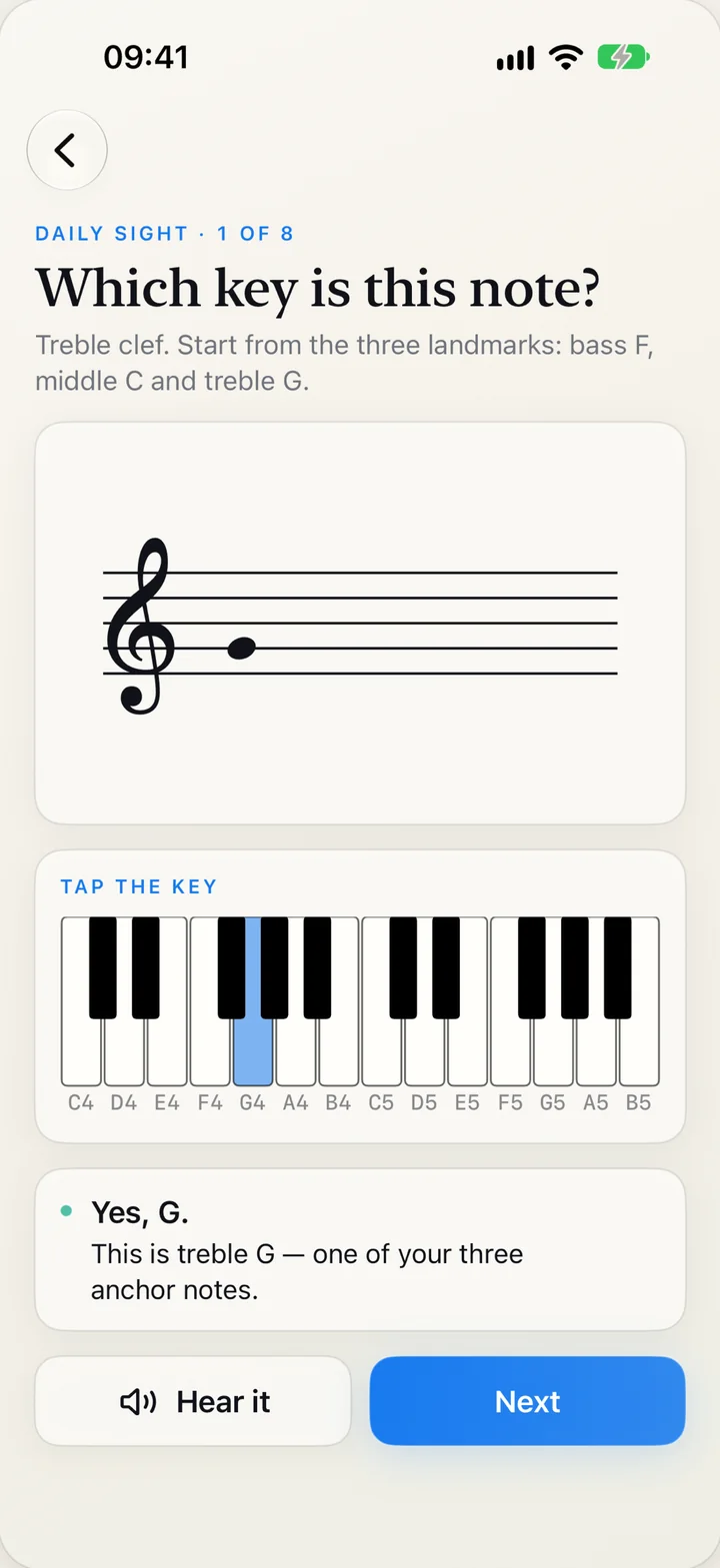
Play the score back, prop the phone on the stand in glance mode, or try a minute of Daily Sight note practice.
See it working
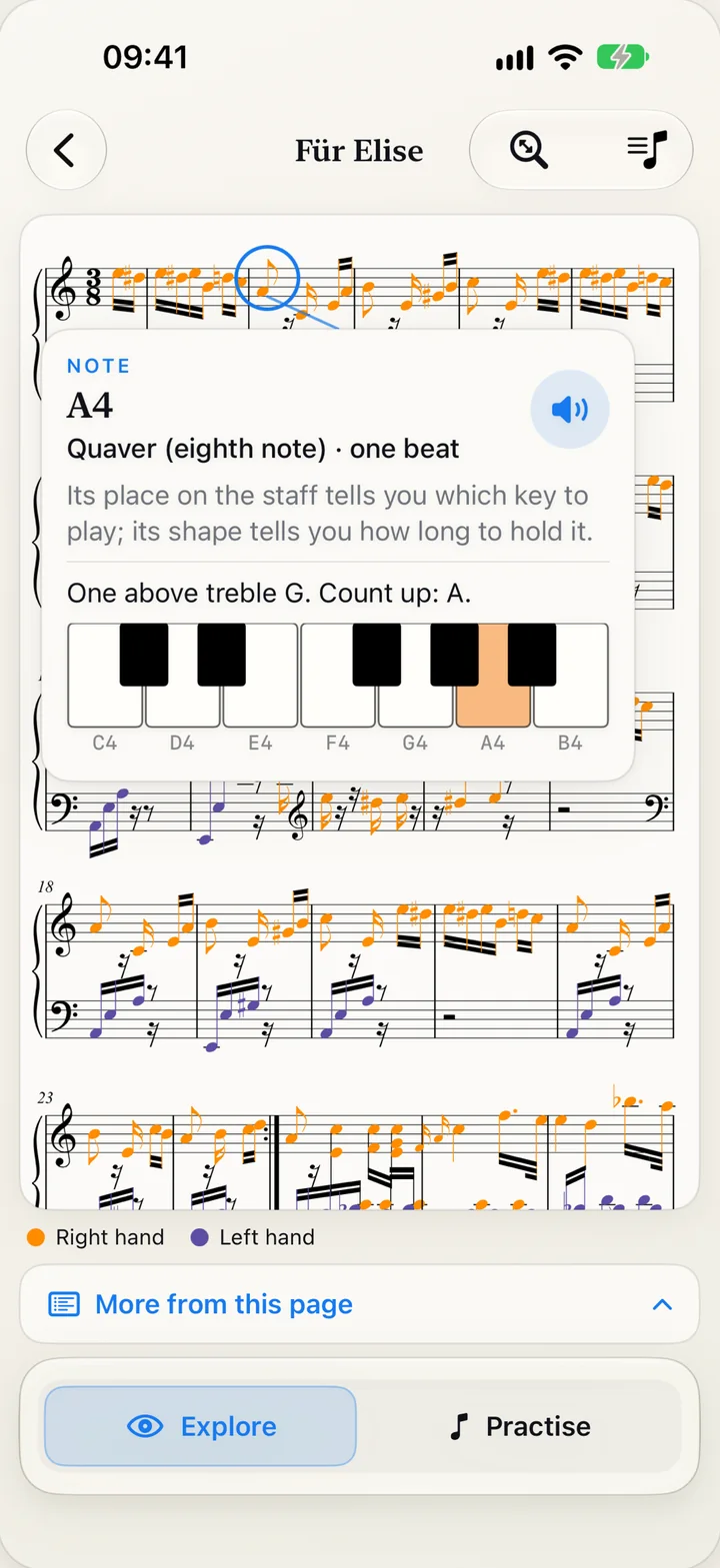
Twenty three seconds on the desk, with Für Elise on the stand. Tap a note in Explore and it names it, says how long it lasts, and lights the key on the piano below. Switch to Practise and a section plays back, bar by bar, with each hand in its own colour.
Where it stands
Working on a real iPhone today: the scanner, recognition, the key, chord and hand analysis, the engraved score with playback, the quiz and cheat sheet, Rhythm Lab, the library, and glance mode.
Built but so far tested only in the simulator: the Start here companion path and Daily Sight, a short daily note-reading practice. They get a device pass before anything ships.
Not yet: a public beta. There is no TestFlight build, and no date for one.
What it will not do
- Set you a curriculum. There are no lesson ladders and no virtual coach.
- Replace learning to read music. It is a companion to it.
- Present a guess as a fact. When recognition is uncertain, it says so.
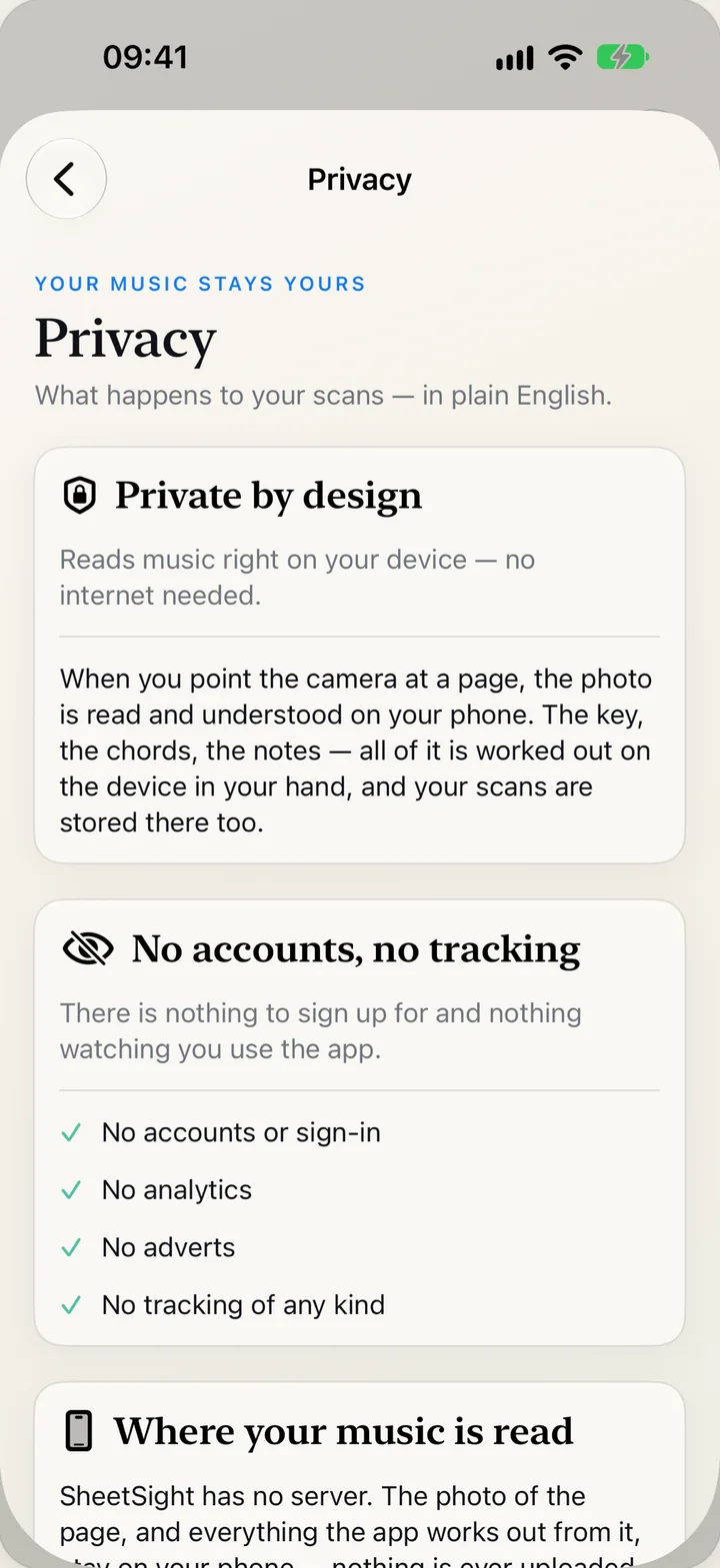
- Touch the network during recognition. There is no server at all.
Where it goes
A gentle lens for the books you already own. Further out, the same teaching layer on a headset, annotating the real page on the stand in front of you rather than a screen beside it.
White paper
- Platform
- Native iOS, Swift and SwiftUI, iPhone and iPad
- Capture
- Custom AVFoundation scanner, three frame burst, sharpest kept
- Recognition
- On-device optical music recognition, pure Swift with ONNX Runtime
- Text
- Apple Vision for titles and markings. Never for notation
- Engraving
- Verovio 6.1.0, bundled and fully offline
- Audio
- AVAudioEngine with a bundled piano SoundFont
- Network
- None in the recognition path. No server, no cloud AI
Recognition accuracy is benchmarked against a fixed set of pages from my own shelf. The method, the failure cases and the current numbers are in the full write up.
Buying it
Not yet. There is an open licensing question in one of the recognition components, and I will not sell something I am not certain I can hand over. The rest of the work, the teaching layer, the design system and the analysis engine, is mine outright. If you are interested, email support@picksley.ai and I will tell you where it stands.